
Lobel's Culinary Club - Recipes, menu ideas, cooking techniques, meat selection tips, and more from America's #1 family of butchers.

Navigation

  • Categories
  • Archives
  • 175th anniversary
  • about lobel's
  • ask the butcher
  • autumn
  • bacon
  • barbecue
  • beef
  • braising
  • christmas
  • cinco de mayo
  • cooking tools
  • culinary classics
  • culinary diy
  • cut of the month
  • easter
  • entertaining
  • food history
  • food pairings
  • grilling
  • guide to meat
  • ham
  • hanukkah
  • holidays
  • lamb
  • lobel's prime meats in manhattan
  • new products
  • new year
  • passover
  • pork
  • poultry
  • recipes & techniques
  • recipes & techniques
  • roasting
  • sausage
  • seafood
  • seasons
  • smoking
  • social media
  • spring
  • stewing
  • summer
  • super sunday
  • thanksgiving
  • t-roy cooks
  • turkey
  • valentine's day
  • veal
  • videos
  • winter
  • yankee stadium
  • November 2021
  • April 2020
  • March 2020
  • February 2020
  • January 2020
  • December 2019
  • November 2019
  • October 2019
  • September 2019
  • April 2019
  • March 2019
  • September 2018
  • August 2018
  • July 2018
  • June 2018
  • May 2018
  • April 2018
  • March 2018
  • February 2018
  • January 2018
  • December 2017
  • November 2017
  • October 2017
  • September 2017
  • August 2017
  • July 2017
  • June 2017
  • May 2017
  • April 2017
  • March 2017
  • February 2017
  • January 2017
  • December 2016
  • November 2016
  • September 2016
  • August 2016
  • July 2016
  • June 2016
  • May 2016
  • April 2016
  • March 2016
  • February 2016
  • January 2016
  • November 2015
  • October 2015
  • September 2015
  • July 2015
  • June 2015
  • May 2015
  • April 2015
  • March 2015
  • February 2015
  • January 2015
  • December 2014
  • November 2014
  • October 2014
  • September 2014
  • August 2014
  • July 2014
  • June 2014
  • May 2014
  • April 2014
  • March 2014
  • February 2014
  • January 2014
  • December 2013
  • November 2013
  • October 2013
  • September 2013
  • August 2013
  • July 2013
  • June 2013
  • May 2013
  • April 2013
  • March 2013
  • February 2013
  • January 2013
  • November 2012
  • October 2012
  • September 2012
  • August 2012
  • July 2012
  • June 2012
  • May 2012
  • April 2012
  • March 2012
  • February 2012
  • January 2012
  • December 2011
  • November 2011
  • October 2011
  • September 2011
  • August 2011
  • July 2011
  • June 2011
  • May 2011
  • April 2011

Links

  • Lobels.com
  • Lobel’s Facebook
  • Lobel’s Pinterest
  • Lobel’s YouTube
  • Home
  • Welcome
  • Articles
  • Contact Us

Welcome

Welcome to the new Lobel’s Culinary Club.

In the years since we launched our Web site and online butcher shop, the Lobel’s Culinary Club has become the cornerstone of our communications with our customers old and new. Our e-mails span the latest news about products and promotions to help you plan peak dining experiences for family meals, special events, and casual entertaining.

A fundamental part of the Culinary Club content comes from our unique perspective as butchers on meat handling and preparation. And while there are many recipes to share, we want to help you go beyond specific recipes to a wider world of in-depth explorations of cooking techniques. When you understand the fundamentals, you are free to invent your own culinary masterpieces.

We believe the more you know about preparing the finest meat money can buy, the more you will enjoy serving it to your family and friends.

With the launch of our expanded Culinary Club, we’ve created a living archive of knowledge that is gleaned from past e-mails and will grow with future e-mails.

Within the Culinary Club, we hope you’ll find numerous and useful resources to enhance your confidence in preparing the finest and freshest meats available, and ensure your absolute delight with the results.

For your dining pleasure,

lobels Signature

Stanley, David, Mark, and Evan Lobel

Lobel Family at the Carving Station

Articles by Month:

  • November 2021
  • April 2020
  • March 2020
  • February 2020
  • January 2020
  • December 2019
  • November 2019
  • October 2019
  • September 2019
  • April 2019
  • March 2019
  • September 2018
  • August 2018
  • July 2018
  • June 2018
  • May 2018
  • April 2018
  • March 2018
  • February 2018
  • January 2018
  • December 2017
  • November 2017
  • October 2017
  • September 2017
  • August 2017
  • July 2017
  • June 2017
  • May 2017
  • April 2017
  • March 2017
  • February 2017
  • January 2017
  • December 2016
  • November 2016
  • September 2016
  • August 2016
  • July 2016
  • June 2016
  • May 2016
  • April 2016
  • March 2016
  • February 2016
  • January 2016
  • November 2015
  • October 2015
  • September 2015
  • July 2015
  • June 2015
  • May 2015
  • April 2015
  • March 2015
  • February 2015
  • January 2015
  • December 2014
  • November 2014
  • October 2014
  • September 2014
  • August 2014
  • July 2014
  • June 2014
  • May 2014
  • April 2014
  • March 2014
  • February 2014
  • January 2014
  • December 2013
  • November 2013
  • October 2013
  • September 2013
  • August 2013
  • July 2013
  • June 2013
  • May 2013
  • April 2013
  • March 2013
  • February 2013
  • January 2013
  • November 2012
  • October 2012
  • September 2012
  • August 2012
  • July 2012
  • June 2012
  • May 2012
  • April 2012
  • March 2012
  • February 2012
  • January 2012
  • December 2011
  • November 2011
  • October 2011
  • September 2011
  • August 2011
  • July 2011
  • June 2011
  • May 2011
  • April 2011

Articles by Subject:

  • 175th anniversary
  • about lobel's
  • ask the butcher
  • autumn
  • bacon
  • barbecue
  • beef
  • braising
  • christmas
  • cinco de mayo
  • cooking tools
  • culinary classics
  • culinary diy
  • cut of the month
  • easter
  • entertaining
  • food history
  • food pairings
  • grilling
  • guide to meat
  • ham
  • hanukkah
  • holidays
  • lamb
  • lobel's prime meats in manhattan
  • new products
  • new year
  • passover
  • pork
  • poultry
  • recipes & techniques
  • recipes & techniques
  • roasting
  • sausage
  • seafood
  • seasons
  • smoking
  • social media
  • spring
  • stewing
  • summer
  • super sunday
  • thanksgiving
  • t-roy cooks
  • turkey
  • valentine's day
  • veal
  • videos
  • winter
  • yankee stadium

Culinary Classic: Spaghetti alla Carbonara

On August 31,2015 In culinary classics

How can so many home cooks and restaurants bastardize one of the most fantastic and classic Roman pasta dishes as if it doesn’t matter?

Originally created from pantry staples for a fast, late-night meal, Spaghetti alla Carbonara is so sorely misinterpreted. It is difficult to find the real thing unless you make it yourself.
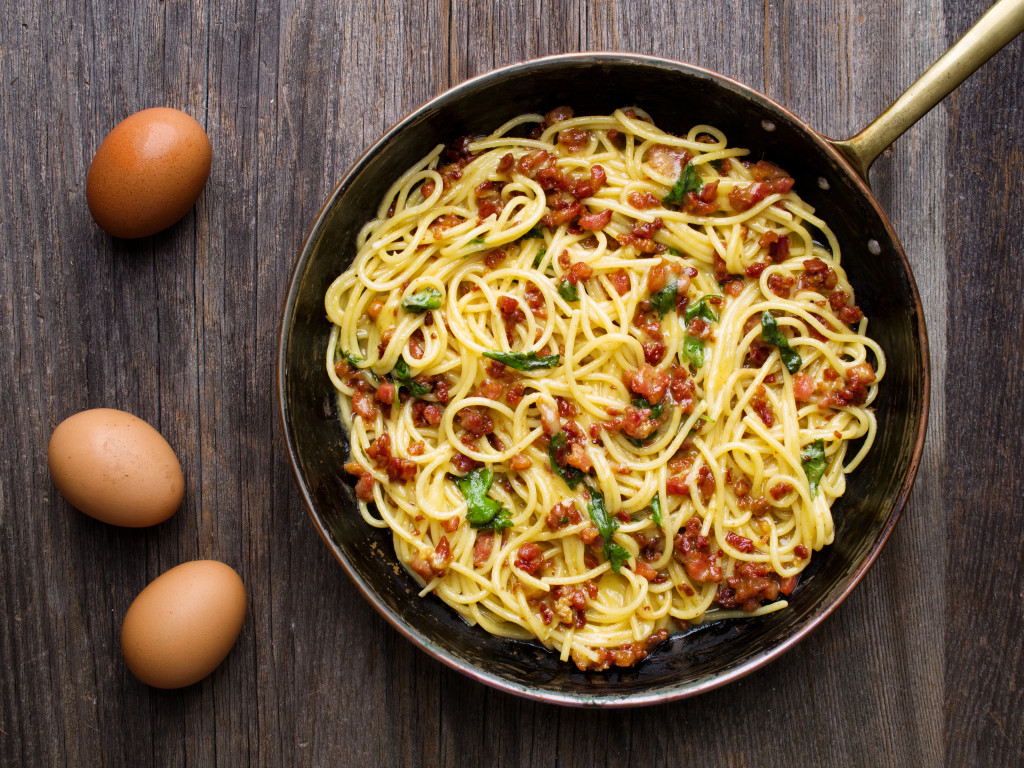
Carbonara


Let’s get it straight: Authentic Spaghetti alla Carbonara has no cream, no mushrooms, no peas, and no onions or scallions. Okay, it might have bacon or pancetta if you can’t find the authentic guanciale.

Mind you, a pasta dish that includes any or all of the above ingredients may be absolutely delicious—it just isn’t real Spaghetti alla Carbonara.

Origins

The actual origins of the dish are unclear. Some say it was created by sheepherders near Rome because it was made of simple ingredients that shepherds would have as they tended their flocks. Others contend that is was named for coal miners, stemming from the word carbonaro, which means charcoal burner. And finally, some believe it was created around the time of World War II when Italians had an abundance of U.S.-rationed eggs and bacon.

The Ingredients

True carbonara is a simple dish of only a few ingredients. Eggs, cheese, and three P’s: pork, pasta, and pepper. That’s it.
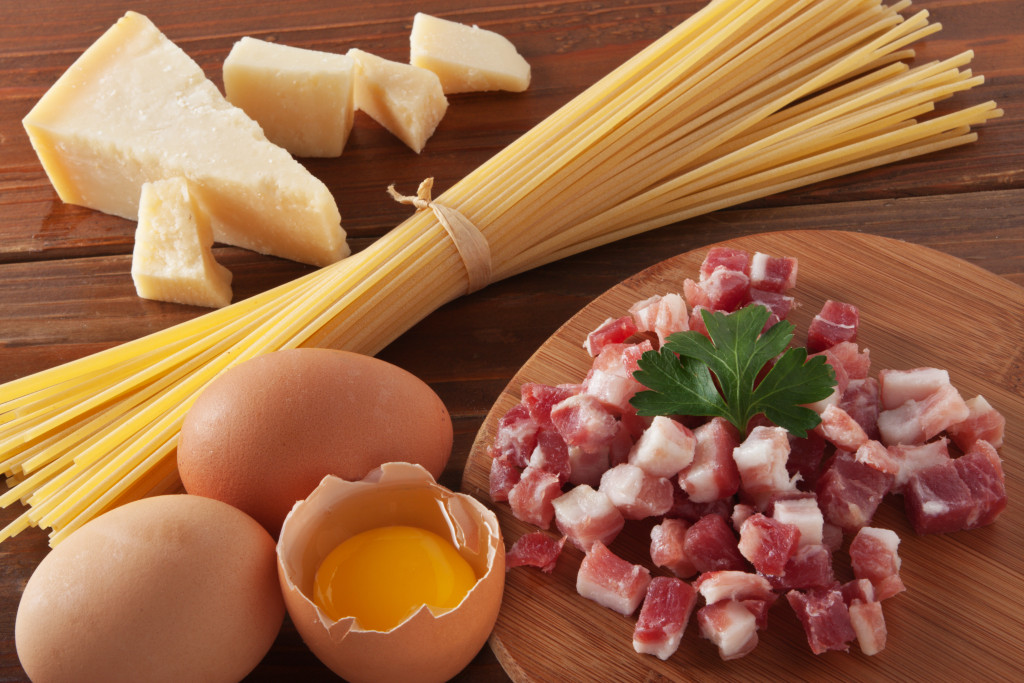
Carbonara Mise En Place

So let’s deconstruct authentic carbonara, head into the kitchen, make a big bunch of it, then chow down to your heart’s content in pasta heaven. A crisp, chilled white would be an excellent complement. An arugula salad with a light vinaigrette would complement and cut through the richness of the dish to round out a magnificent repast.

Spaghetti

If you can find true, imported Italian spaghetti from an artisanal manufacturer, you will never go back to the mass-produced, supermarket variety. It is an eye-opening eating experience with more sauce-hugging texture and flavor than any pasta you’ve consumed previously, with the possible exception of homemade pasta. The small-production pastas are most likely made using age-old milling and production tools, such as hand-carved bronze dies, that give them a rustic surface texture that is worlds away from the smoothness of product made with modern machining. Garofalo, which traces its history to 1789; Rustichella d’Abruzzo; and Benedetto Cavalieri are excellent brands in the artisanal category.

Pepper

Don’t use the pre-ground stuff in a tin box. You might as well use sawdust. Grind it or crush it fresh yourself. If you are new to this, you will not believe the intensity of flavor and aroma of freshly ground pepper. You will thank us later. A good-quality Malabar or Tellicherry are excellent. But, if you want the ultimate, try Parameswaran’s Wynad pepper from the Kerala region of India.

Pork

This is where things get dicey—literally. The original carbonara recipe calls for guanciale—cured hog jowl and cheek, cut into 1/4-inch cubes. Guanciale is similar to pancetta—uncured Italian bacon—but is fattier with a bolder pork flavor.
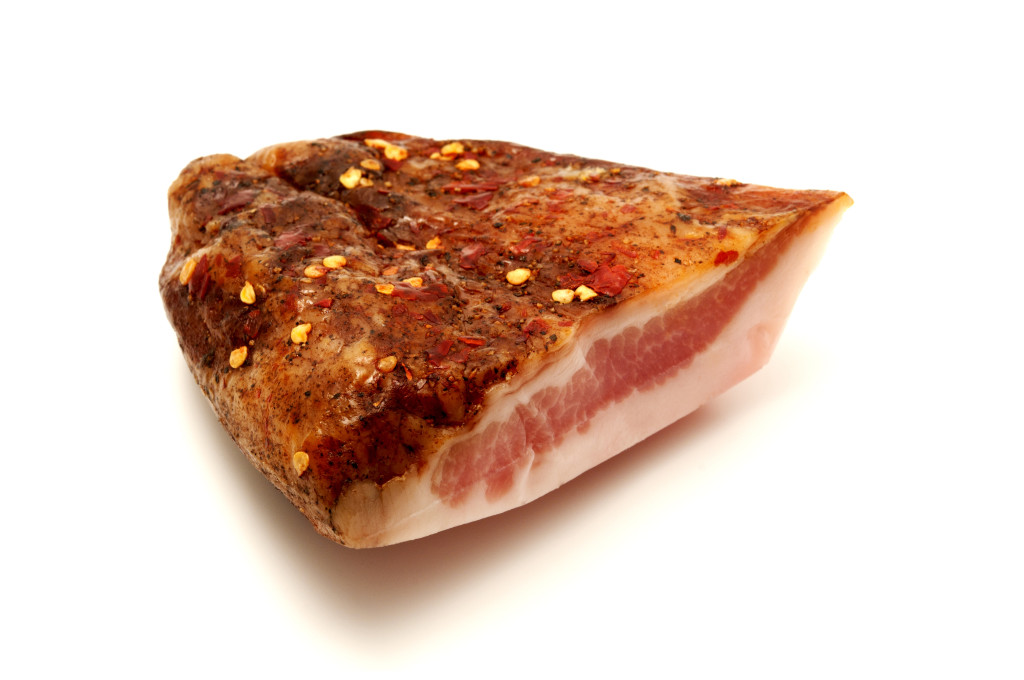
Guanciale

As a practical matter, guanciale is not something you’ll find in the typical deli case. So short of getting an online source, you may have to consider acceptable alternatives.

Therefore, the first choice would be pancetta. Pancetta is a salt-cured pork belly that is rolled and often seasoned with black pepper, which complements the pepper already in the recipe. In recent years, pancetta has become much more readily available and can be found in well-stocked deli cases.

When it comes to bacon as an alternative, you have to go with your instincts. Guanciale and pancetta are cured, but not smoked. As a result, carbonara purists would get a little uncomfortable if we started talking about using any kind of smoked bacon.

However, at risk of heretical suggestion, good hickory- or apple-smoked bacon adds some really good flavor to this dish, especially the way the smoke blends with the pepper and the flavor-rich smoky bacon fat coats the pasta.

Eggs

Not much to be said here, except Grade A large and as fresh as you can get them.

Cheese

Parmigiano-Reggiano and Pecorino Romano. Accept no substitutes. With so few ingredients in carbonara, each one’s quality has to shine. If you don’t use these two cheeses, your carbonara will be a lackluster wannabe.

These two cheeses are similar in that they are both hard, dry Italian grating cheeses.

Romano comes from the hills surrounding Rome and has a bolder flavor—pungent and salty. True Pecorino Romano is made from sheep’s milk, whereas other varieties, including domestic versions, usually are made from cow’s milk which results in a lighter flavor. Pecorino Romano has a higher fat and moisture content and is aged for about 15 months.

Originating in Parma, Italy, Parmigiano has a milder, nutty flavor, is aged for about 10 months, and is always handmade.
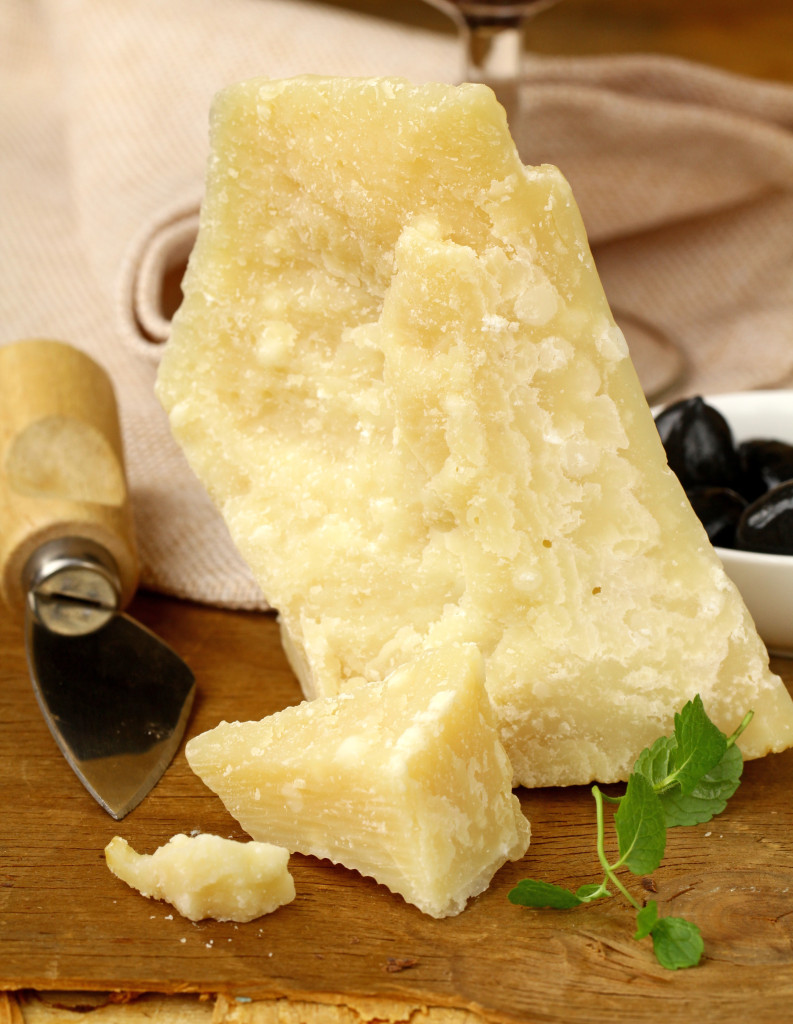
Parmagiano Reggiano

In Italy, the name Parmigiano-Reggiano is government-regulated and the word Parmesan is officially identified as being synonymous with Parmigiano-Reggiano. Therefore, any Parmesan-style cheeses must be labeled something other than Parmesan. In the U.S., however, Parmesan can be related to various versions of the original.

If you are interested in how Parmigiano-Reggiano is made, check out this stunningly beautiful video.

For the best flavor, buy a block of each cheese and have it freshly grated for you. Don’t buy pre-grated packaged cheeses. They contain anti-caking chemicals and just will not have the same robust flavors of the Reggiano and Pecorino. Also, these chemicals prevent the cheese from incorporating smoothly into sauces.

Putting it all Together

Who better to guide us through making authentic Spaghetti alla Carbonara than the Italian cooking stallion himself, Mario Batali. Check out his definitive recipe here.

Have you ever had authentic Spaghetti alla Carbonara? How much of a purist are you about carbonara? Do you prefer it with cream, peas, and other additions?

Leave Your Response

* *

© Copyright 2018
Lobel's Culinary Club.
All Rights Reserved

Lobel's of New York