
Lobel's Culinary Club - Recipes, menu ideas, cooking techniques, meat selection tips, and more from America's #1 family of butchers.

Navigation

  • Categories
  • Archives
  • 175th anniversary
  • about lobel's
  • ask the butcher
  • autumn
  • bacon
  • barbecue
  • beef
  • braising
  • christmas
  • cinco de mayo
  • cooking tools
  • culinary classics
  • culinary diy
  • cut of the month
  • easter
  • entertaining
  • food history
  • food pairings
  • grilling
  • guide to meat
  • ham
  • hanukkah
  • holidays
  • lamb
  • lobel's prime meats in manhattan
  • new products
  • new year
  • passover
  • pork
  • poultry
  • recipes & techniques
  • recipes & techniques
  • roasting
  • sausage
  • seafood
  • seasons
  • smoking
  • social media
  • spring
  • stewing
  • summer
  • super sunday
  • thanksgiving
  • t-roy cooks
  • turkey
  • valentine's day
  • veal
  • videos
  • winter
  • yankee stadium
  • November 2021
  • April 2020
  • March 2020
  • February 2020
  • January 2020
  • December 2019
  • November 2019
  • October 2019
  • September 2019
  • April 2019
  • March 2019
  • September 2018
  • August 2018
  • July 2018
  • June 2018
  • May 2018
  • April 2018
  • March 2018
  • February 2018
  • January 2018
  • December 2017
  • November 2017
  • October 2017
  • September 2017
  • August 2017
  • July 2017
  • June 2017
  • May 2017
  • April 2017
  • March 2017
  • February 2017
  • January 2017
  • December 2016
  • November 2016
  • September 2016
  • August 2016
  • July 2016
  • June 2016
  • May 2016
  • April 2016
  • March 2016
  • February 2016
  • January 2016
  • November 2015
  • October 2015
  • September 2015
  • July 2015
  • June 2015
  • May 2015
  • April 2015
  • March 2015
  • February 2015
  • January 2015
  • December 2014
  • November 2014
  • October 2014
  • September 2014
  • August 2014
  • July 2014
  • June 2014
  • May 2014
  • April 2014
  • March 2014
  • February 2014
  • January 2014
  • December 2013
  • November 2013
  • October 2013
  • September 2013
  • August 2013
  • July 2013
  • June 2013
  • May 2013
  • April 2013
  • March 2013
  • February 2013
  • January 2013
  • November 2012
  • October 2012
  • September 2012
  • August 2012
  • July 2012
  • June 2012
  • May 2012
  • April 2012
  • March 2012
  • February 2012
  • January 2012
  • December 2011
  • November 2011
  • October 2011
  • September 2011
  • August 2011
  • July 2011
  • June 2011
  • May 2011
  • April 2011

Links

  • Lobels.com
  • Lobel’s Facebook
  • Lobel’s Pinterest
  • Lobel’s YouTube
  • Home
  • Welcome
  • Articles
  • Contact Us

Welcome

Welcome to the new Lobel’s Culinary Club.

In the years since we launched our Web site and online butcher shop, the Lobel’s Culinary Club has become the cornerstone of our communications with our customers old and new. Our e-mails span the latest news about products and promotions to help you plan peak dining experiences for family meals, special events, and casual entertaining.

A fundamental part of the Culinary Club content comes from our unique perspective as butchers on meat handling and preparation. And while there are many recipes to share, we want to help you go beyond specific recipes to a wider world of in-depth explorations of cooking techniques. When you understand the fundamentals, you are free to invent your own culinary masterpieces.

We believe the more you know about preparing the finest meat money can buy, the more you will enjoy serving it to your family and friends.

With the launch of our expanded Culinary Club, we’ve created a living archive of knowledge that is gleaned from past e-mails and will grow with future e-mails.

Within the Culinary Club, we hope you’ll find numerous and useful resources to enhance your confidence in preparing the finest and freshest meats available, and ensure your absolute delight with the results.

For your dining pleasure,

lobels Signature

Stanley, David, Mark, and Evan Lobel

Lobel Family at the Carving Station

Articles by Month:

  • November 2021
  • April 2020
  • March 2020
  • February 2020
  • January 2020
  • December 2019
  • November 2019
  • October 2019
  • September 2019
  • April 2019
  • March 2019
  • September 2018
  • August 2018
  • July 2018
  • June 2018
  • May 2018
  • April 2018
  • March 2018
  • February 2018
  • January 2018
  • December 2017
  • November 2017
  • October 2017
  • September 2017
  • August 2017
  • July 2017
  • June 2017
  • May 2017
  • April 2017
  • March 2017
  • February 2017
  • January 2017
  • December 2016
  • November 2016
  • September 2016
  • August 2016
  • July 2016
  • June 2016
  • May 2016
  • April 2016
  • March 2016
  • February 2016
  • January 2016
  • November 2015
  • October 2015
  • September 2015
  • July 2015
  • June 2015
  • May 2015
  • April 2015
  • March 2015
  • February 2015
  • January 2015
  • December 2014
  • November 2014
  • October 2014
  • September 2014
  • August 2014
  • July 2014
  • June 2014
  • May 2014
  • April 2014
  • March 2014
  • February 2014
  • January 2014
  • December 2013
  • November 2013
  • October 2013
  • September 2013
  • August 2013
  • July 2013
  • June 2013
  • May 2013
  • April 2013
  • March 2013
  • February 2013
  • January 2013
  • November 2012
  • October 2012
  • September 2012
  • August 2012
  • July 2012
  • June 2012
  • May 2012
  • April 2012
  • March 2012
  • February 2012
  • January 2012
  • December 2011
  • November 2011
  • October 2011
  • September 2011
  • August 2011
  • July 2011
  • June 2011
  • May 2011
  • April 2011

Articles by Subject:

  • 175th anniversary
  • about lobel's
  • ask the butcher
  • autumn
  • bacon
  • barbecue
  • beef
  • braising
  • christmas
  • cinco de mayo
  • cooking tools
  • culinary classics
  • culinary diy
  • cut of the month
  • easter
  • entertaining
  • food history
  • food pairings
  • grilling
  • guide to meat
  • ham
  • hanukkah
  • holidays
  • lamb
  • lobel's prime meats in manhattan
  • new products
  • new year
  • passover
  • pork
  • poultry
  • recipes & techniques
  • recipes & techniques
  • roasting
  • sausage
  • seafood
  • seasons
  • smoking
  • social media
  • spring
  • stewing
  • summer
  • super sunday
  • thanksgiving
  • t-roy cooks
  • turkey
  • valentine's day
  • veal
  • videos
  • winter
  • yankee stadium

Culinary Classic: Seafood Chowder

On January 5,2016 In culinary classics , recipes & techniques , seafood

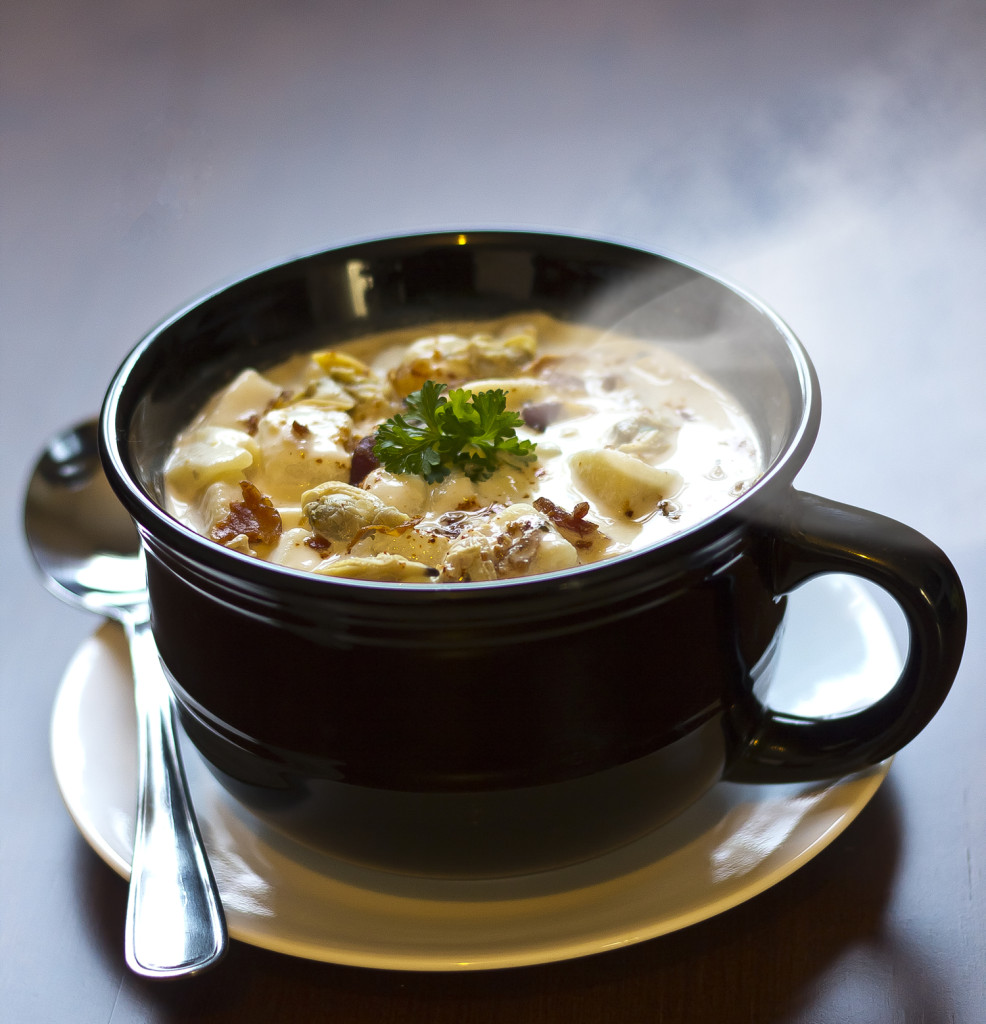
On a cold wintry day, nothing satisfies like a steaming bowl of chowder.

To say that chowders are popular and come in all varieties would be a gross understatement. Type “chowder recipes” into Google and in less than half a second, you’ll get more than a million results.
 

Origins

The term chowder generally connotes a soup containing seafood of some type or combination. Almost every nation with a coastline has developed a type of chowder or seafood stew that is unique to their locale. In the New World, Native Americans consumed many types of fish and seafood stews, particularly clams that were available in abundance, so much so that clams and mussels were often used to feed hogs.

The actual term has links to the Latin word caldera, a cooking vessel, which ultimately became the English word caldron. Some also claim that the word comes from the Old English word jowter, which means fish peddler.

The oldest printed recipe for fish chowder can be traced to 1751. In this preparation ingredients were layered in the cooking pot one on top of the other. For example, onions lined the bottom of the pot on top of which a layer of salt pork, a layer of fish, a layer of seasonings, and a layer of biscuits or crackers were added to thicken the chowder.

Types of Chowder

In this country, there are three primary types of chowder:

  • Clear broth-based (Cape Hatteras-style, South Carolina)
  • Tomato-based (Manhattan-style)
  • Milk/cream-based (New England-style)

Despite the myriad variations and combinations of ingredients, the technique of making any kind of chowder can be broken down into several common steps that link all chowders together.

  • Render, remove from pan, and drain some type of pork product, such as bacon, salt pork, or pork belly, or use melted butter or oil (such as olive, canola, or grape seed).
  • Cook aromatic vegetables and seasonings in the rendered pork fat, butter, or oil.
  • Add potatoes.

Now here’s where it gets interesting. Depending on the type of chowder you are making:

  • Add clam juice or seafood stock for a clear chowder, Hatteras-style.
  • Add tomato paste, diced tomatoes, and seafood stock, Manhattan-style
  • Add seafood stock and cream or milk, New England-style

All-Purpose Chowder Base Recipe

Ingredients

  • 1/4 to 1/2 lb. bacon or salt pork, cut into medium-sized dice *
  • 1 large sweet or Spanish yellow onion, cut into small dice
  • 2 carrots, cut into medium dice (optional)
  • 3 stalks celery, cut into medium dice
  • 2-3 garlic cloves, minced
  • 3-4 sprigs fresh thyme
  • 2-3 medium-sized bay leaves
  • 6-8 peppercorns, whole
  • 2-3 sprigs parsley, minced
  • 4-6 cups seafood stock (chicken or vegetable stock may be substituted, or clam juice if making clam chowder)
  • 2 (8 oz.) Lobel’s Wild-Caught Maine Lobster Tails cut into bite-sized chunks
  • 10 oz. King Crab Merus Sections, meat removed from shell and chopped into bite-sized pieced
  • 10-12 oz. Wild Caught Shrimp, tails removed and meat chopped into 3-4 pieces each.
  • 1 lb. Scallops, cut into quarters

NOTE: The thyme, bay leaf, peppercorns, and parsley may be wrapped in a cheesecloth bundle to make a bouquet garni that can easily be removed before serving the chowder.

*As another option, render diced chorizo, andouille, or linguica for a spicy alternative to bacon or salt pork

Instructions

  1. Cut the bacon or salt pork into small dice or lardons. Cook in a frying pan for several minutes until the bacon is rendered and crisp. Remove from the pan with a slotted spoon and reserve in a bowl or plate.
  2. Remove all but 3 tablespoons of the rendered pork fat and add the onions, celery, carrot, garlic, thyme, and parsley.*
  3. Cook until the aromatics are tender and translucent. Add the diced potatoes and the seafood stock and simmer about 20-30 minutes until the potatoes are just tender.
  4. Add the seafood and simmer 5-7 minutes more.

*If making a vegetarian chowder, use 3 tablespoons of olive, canola, or grape seed oil and begin at Step 2.

Seafood Chowder Variations

Cape Hatteras variation: This is the base version that uses only stock for the liquid.

Manhattan variation: In Step 3, add tomato paste and diced tomatoes.

New England variation: In Step 3, add the seafood, cream or milk, and the reserved bacon to the pot and continue cooking 5-7 minutes more, stirring occasionally.

Controlling the Thickness

If you prefer a thicker chowder, melt 1/4 cup butter and, when foamy, add 1/4 cup flour and whisk briskly to make a roux. Add ½ of the roux to the soup and stir for 1-2 minutes. Add more roux 1 tablespoon at a time and stir until you reach the desired thickness.

Alternatively, add 1 tablespoon of cream cheese and stir until the cream cheese has melted and is incorporated. Add more cream cheese 1 tablespoon at a time until the desired thickness is reached.

Make It Your Own – Get Crazy

The above technique will give you an all-purpose chowder base. But from here you can customize the preparation to make any type of chowder that pleases your imagination and palate.

Think out of the box and get crazy. Ask yourself: “What if I did this, rather than that?”

Beyond the initial steps, what you add to your chowder is between you and your stock pot.

Chowders are very adaptable and can be made unique with some imagination and a perusal of what’s available in your pantry. For example:

  • Instead of starting with the usual bacon or salt pork, render some chorizo, andouille, or linguica. Who says a chowder can’t be spicy?
  • Add cream to a tomato-based chowder.
  • Use one type of seafood—or use a mix and match of seafood.
  • Add shredded or diced chicken
  • Use various vegetables and combinations, such as potato and leeks; corn; roasted peppers; smoke-roasted Vidalia, Maui, or other sweet onions; roasted tomatoes, etc.

For example, here’s a suggestion for a spicy Southwestern-style chowder:

Add shredded roast chicken, white corn kernels, diced red peppers, black beans, pureed ancho or guajillo peppers, and diced avocado for a chowder with a Southwestern kick in any of the 3 varieties.


What is your favorite type of chowder? What unique ingredients do you add to your chowder pot?

Leave Your Response

* *

© Copyright 2018
Lobel's Culinary Club.
All Rights Reserved

Lobel's of New York