
Lobel's Culinary Club - Recipes, menu ideas, cooking techniques, meat selection tips, and more from America's #1 family of butchers.

Navigation

  • Categories
  • Archives
  • 175th anniversary
  • about lobel's
  • ask the butcher
  • autumn
  • bacon
  • barbecue
  • beef
  • braising
  • christmas
  • cinco de mayo
  • cooking tools
  • culinary classics
  • culinary diy
  • cut of the month
  • easter
  • entertaining
  • food history
  • food pairings
  • grilling
  • guide to meat
  • ham
  • hanukkah
  • holidays
  • lamb
  • lobel's prime meats in manhattan
  • new products
  • new year
  • passover
  • pork
  • poultry
  • recipes & techniques
  • recipes & techniques
  • roasting
  • sausage
  • seafood
  • seasons
  • smoking
  • social media
  • spring
  • stewing
  • summer
  • super sunday
  • thanksgiving
  • t-roy cooks
  • turkey
  • valentine's day
  • veal
  • videos
  • winter
  • yankee stadium
  • November 2021
  • April 2020
  • March 2020
  • February 2020
  • January 2020
  • December 2019
  • November 2019
  • October 2019
  • September 2019
  • April 2019
  • March 2019
  • September 2018
  • August 2018
  • July 2018
  • June 2018
  • May 2018
  • April 2018
  • March 2018
  • February 2018
  • January 2018
  • December 2017
  • November 2017
  • October 2017
  • September 2017
  • August 2017
  • July 2017
  • June 2017
  • May 2017
  • April 2017
  • March 2017
  • February 2017
  • January 2017
  • December 2016
  • November 2016
  • September 2016
  • August 2016
  • July 2016
  • June 2016
  • May 2016
  • April 2016
  • March 2016
  • February 2016
  • January 2016
  • November 2015
  • October 2015
  • September 2015
  • July 2015
  • June 2015
  • May 2015
  • April 2015
  • March 2015
  • February 2015
  • January 2015
  • December 2014
  • November 2014
  • October 2014
  • September 2014
  • August 2014
  • July 2014
  • June 2014
  • May 2014
  • April 2014
  • March 2014
  • February 2014
  • January 2014
  • December 2013
  • November 2013
  • October 2013
  • September 2013
  • August 2013
  • July 2013
  • June 2013
  • May 2013
  • April 2013
  • March 2013
  • February 2013
  • January 2013
  • November 2012
  • October 2012
  • September 2012
  • August 2012
  • July 2012
  • June 2012
  • May 2012
  • April 2012
  • March 2012
  • February 2012
  • January 2012
  • December 2011
  • November 2011
  • October 2011
  • September 2011
  • August 2011
  • July 2011
  • June 2011
  • May 2011
  • April 2011

Links

  • Lobels.com
  • Lobel’s Facebook
  • Lobel’s Pinterest
  • Lobel’s YouTube
  • Home
  • Welcome
  • Articles
  • Contact Us

Welcome

Welcome to the new Lobel’s Culinary Club.

In the years since we launched our Web site and online butcher shop, the Lobel’s Culinary Club has become the cornerstone of our communications with our customers old and new. Our e-mails span the latest news about products and promotions to help you plan peak dining experiences for family meals, special events, and casual entertaining.

A fundamental part of the Culinary Club content comes from our unique perspective as butchers on meat handling and preparation. And while there are many recipes to share, we want to help you go beyond specific recipes to a wider world of in-depth explorations of cooking techniques. When you understand the fundamentals, you are free to invent your own culinary masterpieces.

We believe the more you know about preparing the finest meat money can buy, the more you will enjoy serving it to your family and friends.

With the launch of our expanded Culinary Club, we’ve created a living archive of knowledge that is gleaned from past e-mails and will grow with future e-mails.

Within the Culinary Club, we hope you’ll find numerous and useful resources to enhance your confidence in preparing the finest and freshest meats available, and ensure your absolute delight with the results.

For your dining pleasure,

lobels Signature

Stanley, David, Mark, and Evan Lobel

Lobel Family at the Carving Station

Articles by Month:

  • November 2021
  • April 2020
  • March 2020
  • February 2020
  • January 2020
  • December 2019
  • November 2019
  • October 2019
  • September 2019
  • April 2019
  • March 2019
  • September 2018
  • August 2018
  • July 2018
  • June 2018
  • May 2018
  • April 2018
  • March 2018
  • February 2018
  • January 2018
  • December 2017
  • November 2017
  • October 2017
  • September 2017
  • August 2017
  • July 2017
  • June 2017
  • May 2017
  • April 2017
  • March 2017
  • February 2017
  • January 2017
  • December 2016
  • November 2016
  • September 2016
  • August 2016
  • July 2016
  • June 2016
  • May 2016
  • April 2016
  • March 2016
  • February 2016
  • January 2016
  • November 2015
  • October 2015
  • September 2015
  • July 2015
  • June 2015
  • May 2015
  • April 2015
  • March 2015
  • February 2015
  • January 2015
  • December 2014
  • November 2014
  • October 2014
  • September 2014
  • August 2014
  • July 2014
  • June 2014
  • May 2014
  • April 2014
  • March 2014
  • February 2014
  • January 2014
  • December 2013
  • November 2013
  • October 2013
  • September 2013
  • August 2013
  • July 2013
  • June 2013
  • May 2013
  • April 2013
  • March 2013
  • February 2013
  • January 2013
  • November 2012
  • October 2012
  • September 2012
  • August 2012
  • July 2012
  • June 2012
  • May 2012
  • April 2012
  • March 2012
  • February 2012
  • January 2012
  • December 2011
  • November 2011
  • October 2011
  • September 2011
  • August 2011
  • July 2011
  • June 2011
  • May 2011
  • April 2011

Articles by Subject:

  • 175th anniversary
  • about lobel's
  • ask the butcher
  • autumn
  • bacon
  • barbecue
  • beef
  • braising
  • christmas
  • cinco de mayo
  • cooking tools
  • culinary classics
  • culinary diy
  • cut of the month
  • easter
  • entertaining
  • food history
  • food pairings
  • grilling
  • guide to meat
  • ham
  • hanukkah
  • holidays
  • lamb
  • lobel's prime meats in manhattan
  • new products
  • new year
  • passover
  • pork
  • poultry
  • recipes & techniques
  • recipes & techniques
  • roasting
  • sausage
  • seafood
  • seasons
  • smoking
  • social media
  • spring
  • stewing
  • summer
  • super sunday
  • thanksgiving
  • t-roy cooks
  • turkey
  • valentine's day
  • veal
  • videos
  • winter
  • yankee stadium

Culinary Classic: Paella

On March 18,2013 In culinary classics , grilling , sausage , seafood

If you love food, you have to watch this YouTube video. It’s about the making of the best paella in the world—or so the title claims. By the end, no doubt, you will believe every word is true. And if this doesn’t leave you weak in the knees and salivating or make you want to catch the next Iberia airliner to Spain, you surely have ice water in your veins.
1054173_15568562

And if you love to cook, especially over wood, smoke, and flame, this video will inspire you. It will drive you to recreate this smoky, savory marriage of meat, seafood, rice, and the world’s most expensive spice into a stew of drama and exploding flavors—in your own backyard.

The video is of Ayo, chef and owner of his namesake restaurant, Chiringuito de Ayo, located on La Playa Burriana on the Costa del Sol in Spain. Ayo, the video notes, has been making 4 to 5 huge paella dishes every day for more than 30 years at his beachside “snack bar.” Ayo’s dig-right-in approach with flames lapping at the edges of the simmering dish contrasts sharply with the tentative attempts of the video’s unidentified host to stir the massive undertaking.

This video is a blueprint of paella-making technique rather than a specific recipe.

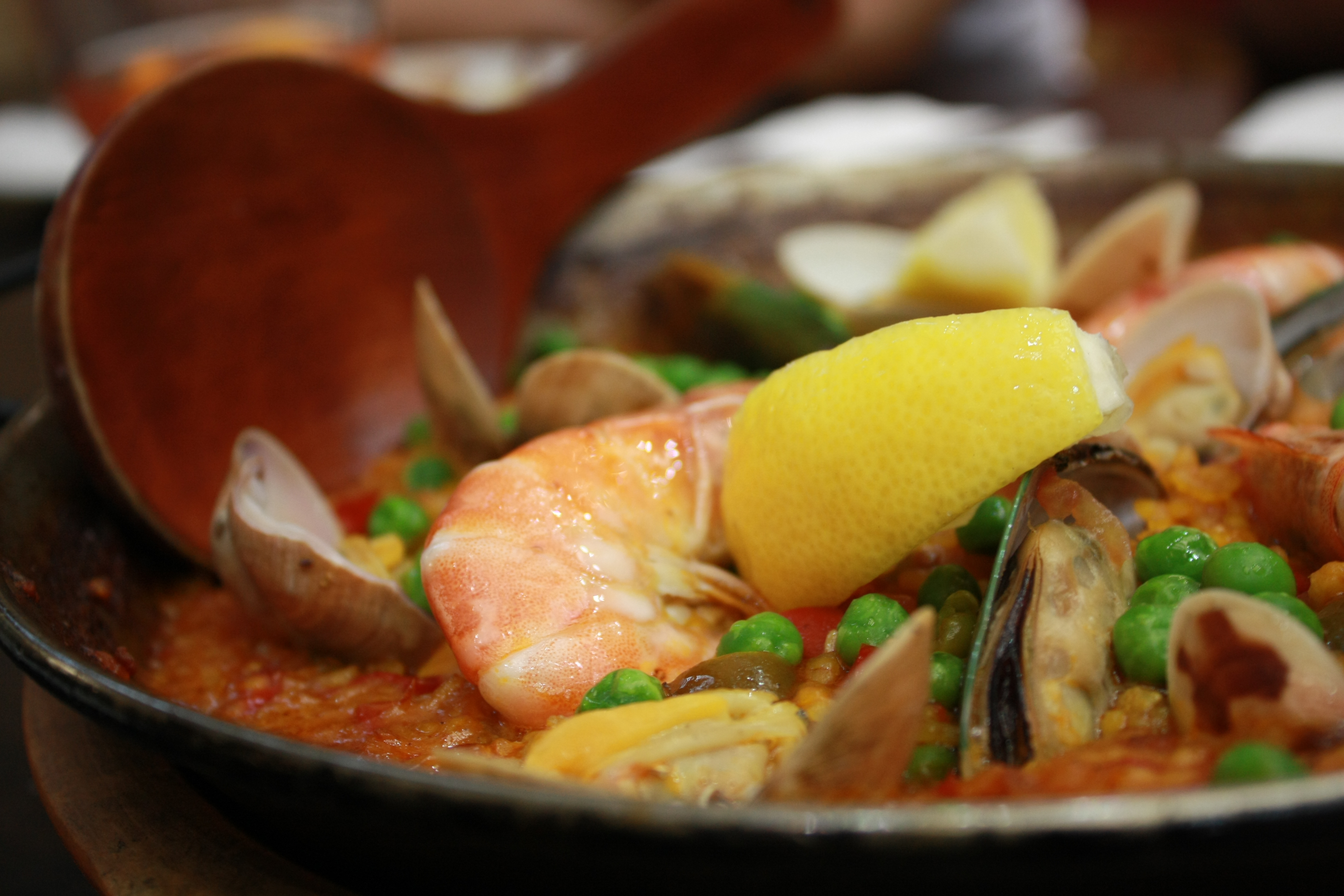
This version of paella is called mixta which blends meats and seafood. It begins with olive oil and garlic to brown such base meats as chicken and ham, with the later addition of vegetables and spices. Next comes the rice and broth. Seafood, including fish, shrimp, squid, or mussels, and chorizo sausage are added last as the dish simmers until the rice has plumped and softened and is ready to serve.

Its origins go back to mid-19th century Spanish city of Valencia. In addition to saffron, one of the characteristic ingredients in authentic paella is the use of bomba rice.

Bomba rice comes from the Calasparra region of Spain. It is preferred for paella because it absorbs 3 times its own volume in stock, compared to 2 times for most other rice strains.
222749_4975

Paella Pans

As with a Korean bulgogi or an Argentine parrilla, paella bears the same name as the vessel in which it is cooked.

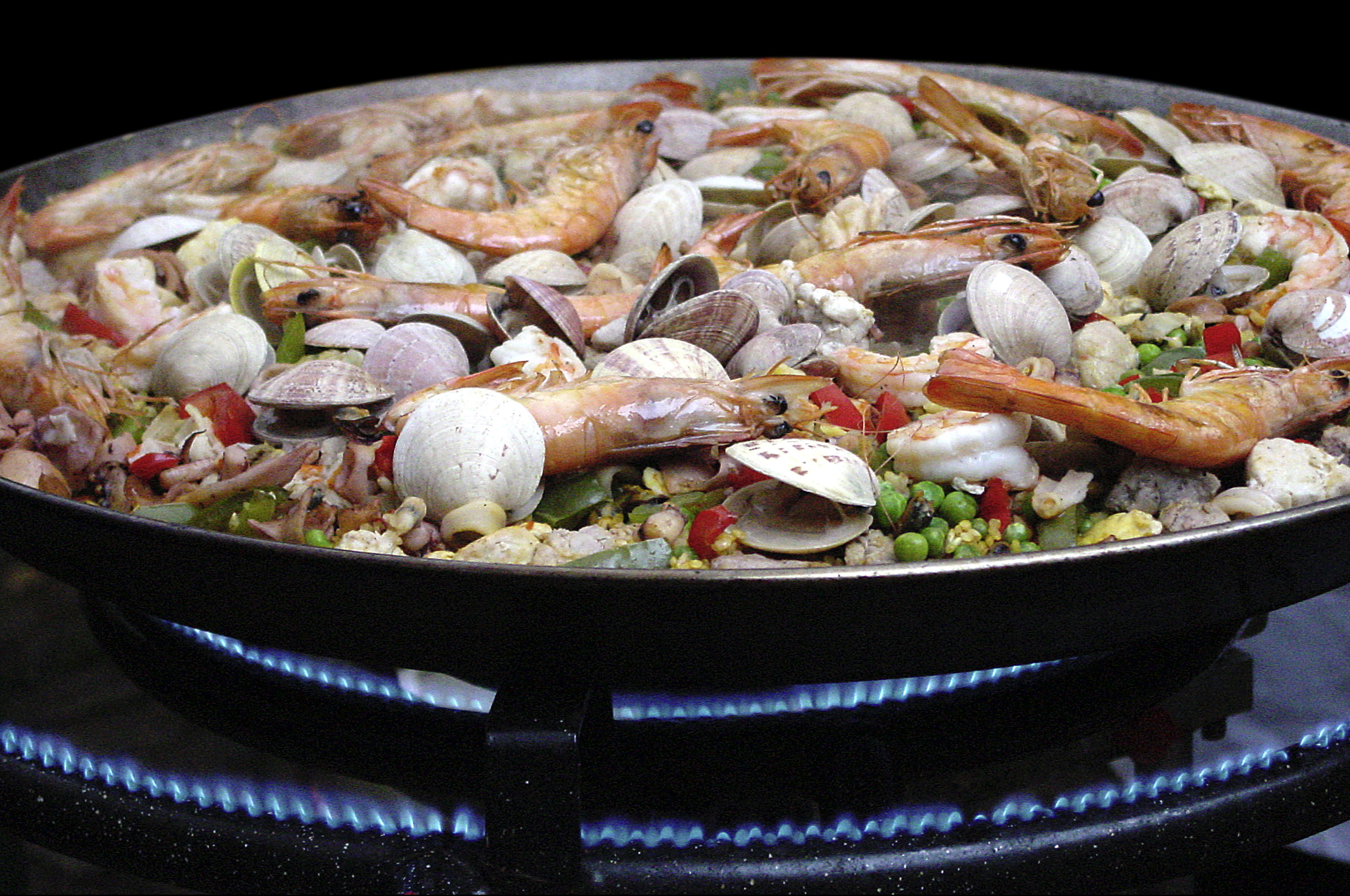
The biggest paella pans can go up to 4 1/2 feet in diameter and are used with a long-handled spatula and a specially built stand that sits over a hardwood fire. However, it is possible to replicate this method on a home-sized scale using a 22-inch Weber charcoal grill and a 17-inch paella pan.

The most traditional paella pans are made of carbon steel with hammered and dimpled bottoms. Carbon steel is to paella what cast iron is to fried chicken. This type, many would argue, produces the best tasting paella. The pan is relatively light and responds well to sudden changes in heat. This is also the type you can use on a grill. Do not try to use a pan that is enameled or has non-steel handles or handle coatings. A wood fire can get very hot and would crack enamel and melt rubberized handles. Besides, once you fit the paella pan into the grill, it won’t be necessary move the pan through the entire cooking process.
620310_45276416

What’s So Special About Saffron?

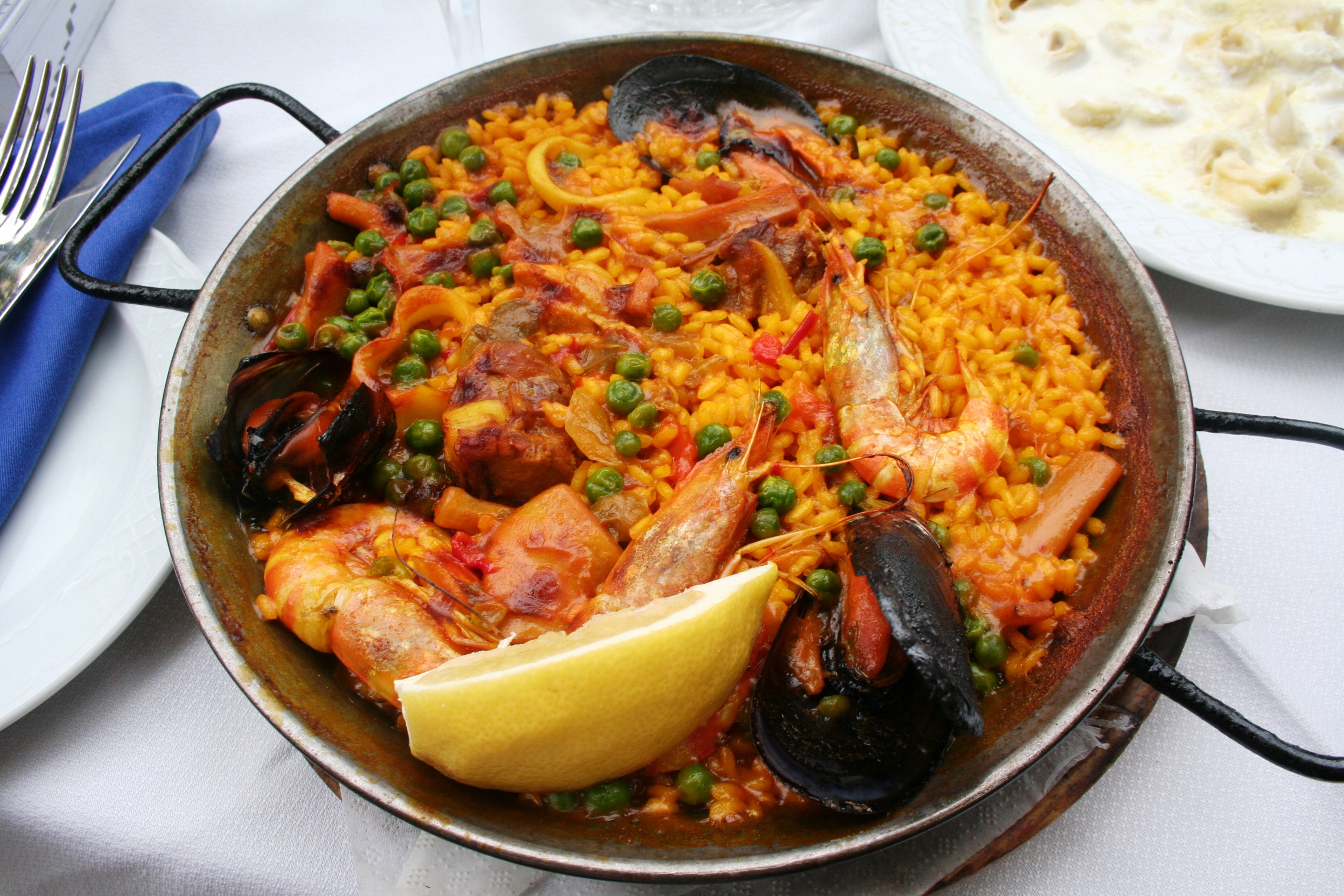
Less than 1/2 gram of the finest saffron threads can run more than $60.00. On the other hand, a little goes a long way. Saffron has a pervasive way about it—changing the rice to be golden hued and infusing its unique flavor.

Why is saffron so expensive? Cultivated for nearly 3,000 years, saffron originated in Greece and is now grown in various areas around the world, largely in the Middle and Far East. Saffron threads are the stigma from the saffron crocus. A single bloom yields only three stigmas, and those precious few have to be hand-plucked. It takes about 500 stigmas, or 166 crocus flowers, to make 1 gram of saffron.
336697_3163

Tips for Paella on The Grill

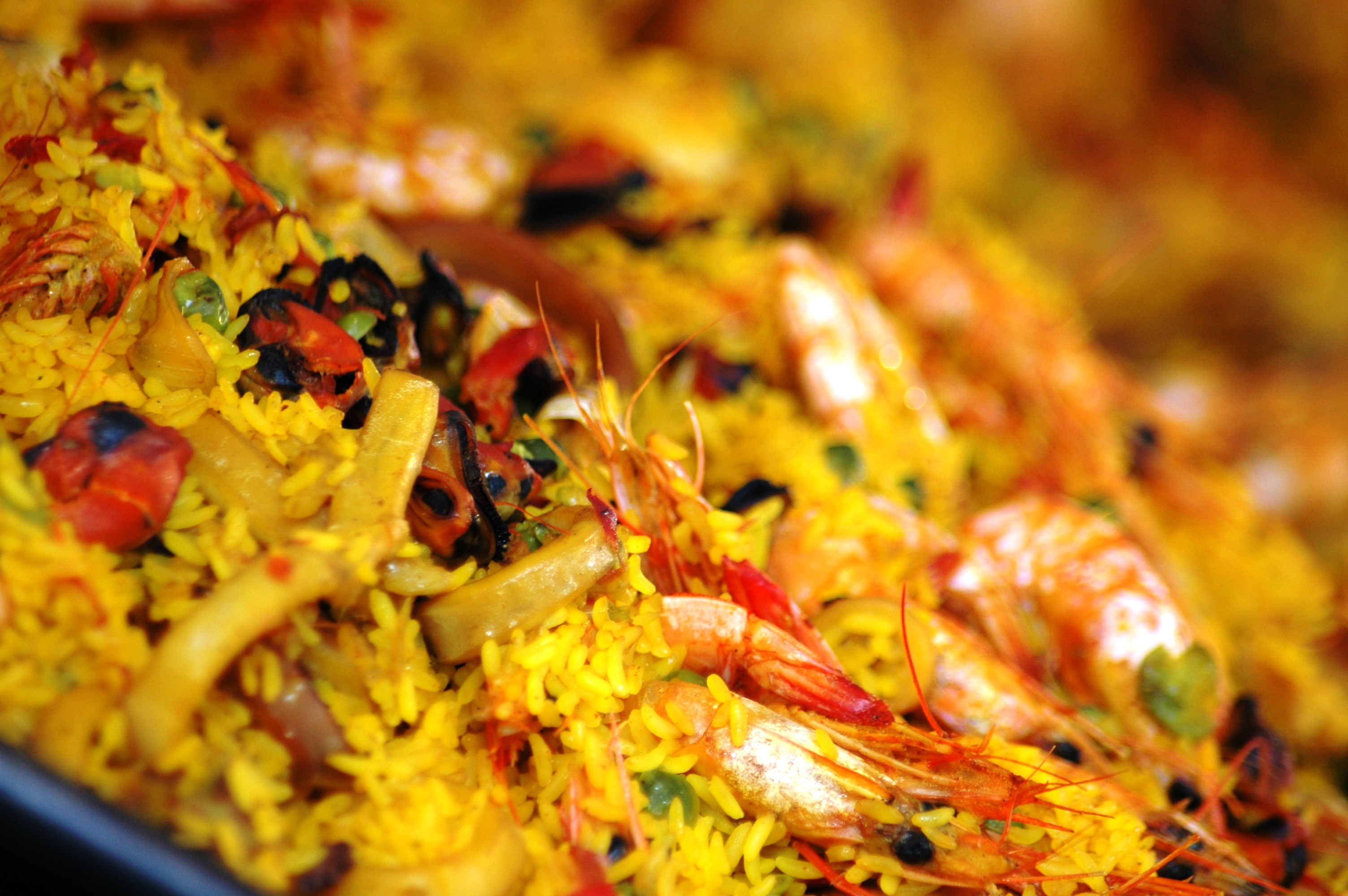
Just about any paella recipe can be adapted to the grill because the technique is the same.

Cook the paella over direct heat. Distribute the coals as evenly as possible to avoid hot spots.

For authenticity, use wood chunks that yield a comparatively mild smokiness. Oak, apple, or pecan are better choices than the heavy smoke from hickory or mesquite.

Be very careful. If you use hardwood logs or chunks to fuel your fire, the heat from the grill can be more than 600oF and produce considerable flame. So be sure have a set of heavy, heat-resistant gloves at the ready. Foundry gloves are ideal.

Make sure that you have extra stock—regardless of what a given recipe calls for. Most likely your fire will create hot spots that will evaporate the stock at a faster pace than it can be absorbed by the rice. Add stock to these hot spots, and stir the entire dish frequently to prevent sticking.

As the rice cooks, some will stick to the bottom of the pan and create a toasted layer that is considered a delicacy and flakes off in lacy wafers. The Spanish call this socarrat. Essentially, this is what the French call fond—the browned bits that are often deglazed with water, stock, or wine. As the French say: Fond is flavor. So don’t you dare leave the socarrat in the bottom of the pan until you scour it out with a Brillo pad.

Whereas Ayo doesn’t use a cover, you can use the lid of your kettle grill and the vents to regulate the heat once the rice and stock are added to produce a fast simmer, rather than a constantly roaring blaze. Also, covering the paella as it cooks will trap the smoke for extra flavor and help to steam the rice.


Have you ever made paella? Do you cook on the stovetop or on the grill? How big is your paella pan? Or do you prefer to order paella at a restaurant? What’s the best place to get great paella?

Leave Your Response

* *

© Copyright 2018
Lobel's Culinary Club.
All Rights Reserved

Lobel's of New York