

Whether you’re preparing for a houseful of costume-clad adults or making sure your youngsters head out for trick or treating with full tummies, a Halloween party or fall family dinner can become any kind of affair you like. Quick-serve dishes or hearty comfort food will fit the bill every time. And even though it’s Halloween, we demystify the scariest of culinary tasks for you with our expert tips and techniques.
Festive & Fabulous: Fall Parties
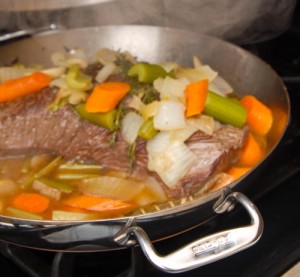
Braised Pot Roast
Planning a Halloween soiree or a party fit for fall needn’t put you on edge. Having flexible menu options will ensure that you keep things under control while keeping your guests and hungry Halloweeners well-fed and happy.
When planning your fall party menu, think about the kind of presentation that is best suited to the occasion.
For example, a braised dish like pot roast is great for a sit-down or buffet-style party. You can save yourself a lot of party-day stress by braising a pot roast, brisket, pork butt, or other large cuts a day or two ahead of the party so that the day of the party simply requires reheating and serving your braised delicacy.
On the other hand, for smaller gatherings, a quick sauté of pork or veal medallions can go from pan to table in just a matter of minutes. Emphasize the flavors of the fall harvest with a savory chutney or rustic, chunky applesauce. Alternatively, making a pan sauce adds just a couple minutes more to the preparation and gives the entire dish a slightly more formal and elegant presentation.
A party of appetizers is also another route to go. For a simple solution, try browning some hearty seasonal sausages, Lobel’s Apricot-Cranberry Bratwurst, for example. Slice into 1/2-inch rounds and serve with crackers and a couple of different kinds of mustard.
Lollichops—single-cut rib lamb chops with a Frenched bone—are one of those appetizers that have a way of disappearing from the serving platter. Grilled, broiled, or roasted, the lamb chops come with their own handle for dunking in a delicious sauce, from mint to Moroccan flavors. Try roasting a rack of lamb and then cutting it into individual chops.
Another party favorite is fondue and the myriad options that various fondues can offer. Certainly the traditional Swiss-style cheese fondue is great for raw vegetables, bread, and cooked or cured meats. This type of fondue is ideal for foods that need a cheesy coating, but do not require cooking. However, raw or partially cooked meats are best served with oil- or broth-based fondues that are hot enough to actually cook the meat thoroughly. In fact, this type of fondue is better served at a smaller sit-down affair, while a cheese fondue is great for an open-house or buffet-style party.
Scary Night – Scrumptious Food
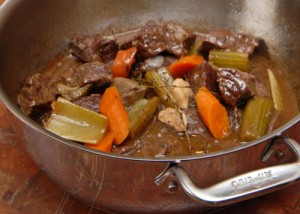
Beef Stew
On Halloween night, leave all the menacing to the costumed goons and goblins who come to your door calling out for treats or taunting with threats of tricks. For Halloween, it’s a good idea to give your trick or treaters something nutritious and filling before they hit the streets and begin indulging in the treats they collect.
Popular choices are stews and chili for their warming and rib-sticking qualities. Check our online Butcher Shop for beef, veal, lamb, and pork cubes for any kind of stew you can imagine. For chili, try our USDA Prime Ground Beef or Tri-Tip, the preferred cut for chili champions everywhere.
Steak sandwiches are another come-and-go item. A thinly sliced shell (or strip) steak, tenderloin steak, or flat iron cooks in a flash—just a couple minutes on each side. Slide one into a crusty roll for a delicious departure on a cold autumn night.
Lobel’s line of Family-Cut Favorites offer a wide range of cuts that are great values and packed with flavor. The majority of our Family-Cut Favorites selections are geared toward quick-to-cook cuts that are ideal for sautéing, grilling, or broiling.
It May be Halloween … But Don’t be Afraid!
Are there any culinary tasks that spook you? Cooking techniques that make you shriek with fright? Menu items that have you calling for mummy? The calendar says Halloween is coming near, but there’s no need to be afraid. Some of the most daunting cooking techniques can be made approachable by just breaking down the steps, then giving it a try. Here are some tips for cooking techniques that customers ask us about most often.
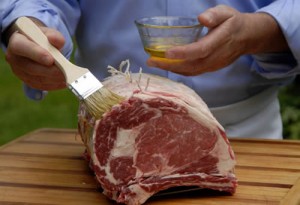
Grill Roasting a Rib Roast
Grill Roasting
While everyone with a grill is comfortable grilling steaks, chops, burgers, and hot dogs, cooking a roast on the grill might seem like a daunting task best left to the intrepid. But grill-roasting a beef roast is easier than you think. In principal, the biggest difference between grilling a steak or a roast is the amount of time required to bring it to golden-brown, aromatic perfection—the juiciest and most tender roast you can imagine with unique flavors only cooking with smoke and flame can impart.
To tackle grill roasting, simply follow our online How To photo tutorial or our How To video on Grilling the Perfect Rib Roast.
Making Stock
One of cookery’s foundations and a key to individual cooking style is stock-making—the source of soups, sauces, and gravies from around the globe. Having a freezer full of variously flavored stocks can make any dedicated from-scratch cook feel wealthy and prepared for anything.
What exactly is stock? It’s a low-simmered broth made from cooking meat, poultry, or seafood with or without vegetables and seasonings in liquid—the base for making soups, sauces, gravies, glaces, and demi-glaces.
Ingredients
Although you can opt for fresh whole poultry and meat selections, stock-making is an efficient way to extract every bit of goodness from trimmings and leftovers.
When making poultry stock, necks, wings, backs, and gizzards can be used alone or combined with whole poultry or poultry pieces. Do not use poultry livers—they will make the stock bitter.
Fresh bone-in cuts of meat or leftover bones from roasted, grilled, or boiled meats are a good start for stock, particularly if there’s some meat still on them, which can be used later in soup.
Beef, veal, lamb, and pork bones of almost any type, particularly shanks and whole leg bones are stock foundations. Meat and poultry bones contain marrow which, when simmered, is absorbed into the stock giving it body, and it acts as gelatin in cold stock (aspic).
Equipment
Stockpot—Heavy gauge to withstand the high heat needed for browning stock ingredients.
Colander & Cheesecloth—To strain the stock of solids. Cut a piece of cheesecloth that, when dry, lines the inside of the colander and overhangs by 2 to 3 inches. Dampen the cheesecloth with water and then unfold it to a double thickness to line the colander.
Skimmer—This long-handled tool with a wide, fine-mesh screen is a life saver.
Potato masher or heavy spoon—Once the stock solids are in the colander (may have to do this in batches), gather the cheesecloth around the stock solids and press down on them with the masher or spoon to extract as much liquid as possible.
Gravy separator—This handy 2- to 4-cup container that looks like a measuring cup with the spout at the bottom is used to separate the fat from stock.
Control the Heat
Heat control is of paramount importance in stock-making. Initially, stock should be brought to a boil, but only briefly until the surface is skimmed of any foam.
After that, do not boil the stock. Lower the heat. Simmer is the keyword—bubbles slowly rising to the surface, not a raging roll of bubbles.
Why so important? Boiling breaks down fats from the meats and other ingredients, emulsifying them and making them inseparable from the final stock, turning it cloudy. Simmering keeps the fats intact, letting them rise to the surface for skimming or separation later for a sparkling clear result.
Three Important Steps
Skimming—Within the first 30 to 45 minutes on the heat, the stock will produce a foam that rises to the surface and should be carefully skimmed away. A long-handled skimmer; a large, slotted spoon; or a small handheld sieve are the best tools for this task.
Straining—Use the cheesecloth and colander to separate the stock’s solids from the broth.
De-Fatting—Here are some options:
— In batches, pour the stock through a gravy separator.
— After removing the solids, refrigerate the stock until a layer of fat has hardened on the surface, which can then be removed with a spoon or spatula.
— Small bubbles of fat can be removed from the surface of warm stock by dragging the edge of a paper towel over the spot of fat.
Recipes
Beef Stock
Chicken Stock
Lamb Stock
Veal Stock
Frenching Bones
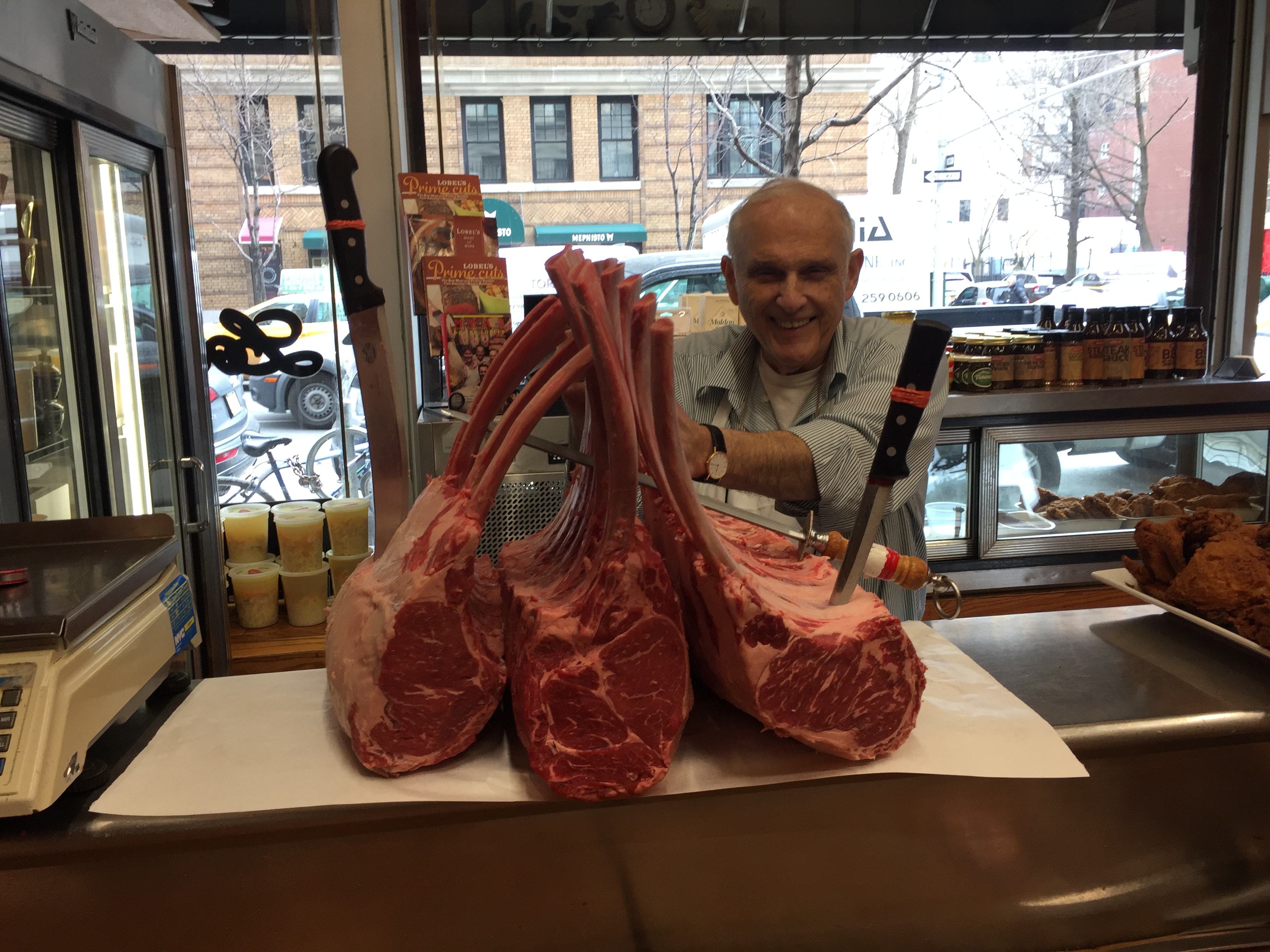
Frenching the bones gives an elegant presentation to just about any bone-in roast, chop, or steak. When you want to amp up the presentation of your finished dish a bit, consider Frenching. Many butchers will do this for you, but it’s also a technique you can learn yourself—and master with a little practice!
Make a cut about 1 inch from the end of the bones (or further for longer bones), at a right angle to the bone. With this cut, be sure to cut through the meat and fat between the bones, and perforate the meat on the bone as well.
Then, cut down between the bones, working the knife to strip away all the meat on that one inch until you have only an inch of bare bone sticking out at the end.
If you are using this technique on a roast, you can add little paper ruffles on the tip of each bone to further enhance your presentation once the roast is done cooking.
Boo!
What parties are you planning for October? Adults-only or family-friendly? Formal or casual? What’s on the menu?
What culinary tasks frighten you? Have you taken them on yet, or are you too scared to try?

Leave Your Response